Betquoplay
Why Reliable Extraction Beats Quick Fixes: A User-Centric Guide to Laser Engraver Fume Extractors
Introduction — A Workshop Moment, Numbers, and a Question
I was sanding a small walnut plaque the other day and the shop filled with that warm, bitter smoke you can't ignore. In many small shops today, a laser engraver fume extractor sits near the workbench to catch that haze, but too often it’s treated like an afterthought. Studies show particulate and VOC levels near engraving stations can spike five to ten times above safe limits within minutes (small space, big impact). So, how do we choose a system that actually breathes life back into a workspace rather than simply ticking a box? I want to walk you through what I’ve learned, using senses—sight, smell, and the quiet hum of a well-tuned fan—to explain why some choices feel right and others don’t. Imagine the air clearing, the warm wood smell lingering instead of the acrid sting—there’s a difference you can almost taste. That difference starts with understanding the equipment and the simple physics behind capture and filtration; let’s move into where most setups go wrong so you can spot the red flags faster.
Hidden Frictions: Why Typical Filters Fail
laser engraver air purifier is the name people use when they mean "I need my air clean and my shop safe," but I’ve seen so many shops that think a box fan plus a carbon pad equals protection. They don’t. Look, it’s simpler than you think: capture and filtration are two different jobs. Capture depends on airflow rate and hood placement; filtration depends on media like HEPA filter layers and activated carbon beds. If either is weak, the rest is window dressing. I’ve tested machines where VOC sensors barely blinked because the intake was misaligned—and others where power converters and fan controllers choked under load, cutting efficiency during long runs. Those are not theoretical failures; they’re the everyday grind. In short: proper capture geometry, reliable fan control (no voltage sag), and true filtration media matter most.
What breaks down first?
The obvious culprits are clogged pre-filters and saturated activated carbon. But the less obvious ones are poorer designs that allow backflow, fan turbulence that drops capture velocity, and software that ignores sensor drift. When maintenance is hard or replacement parts aren't available, users compromise—running units at lower speeds or removing filters altogether. I’ve been frustrated watching people do that. It’s avoidable. If you pick a system with modular filters, easy access, and straightforward calibration for VOC sensors, you’ll reduce those small shortcuts that add up to big risks. That practical reliability is the piece most vendors gloss over—but it’s what keeps you breathing easy.
Future-Proofing: Principles for Better Extraction
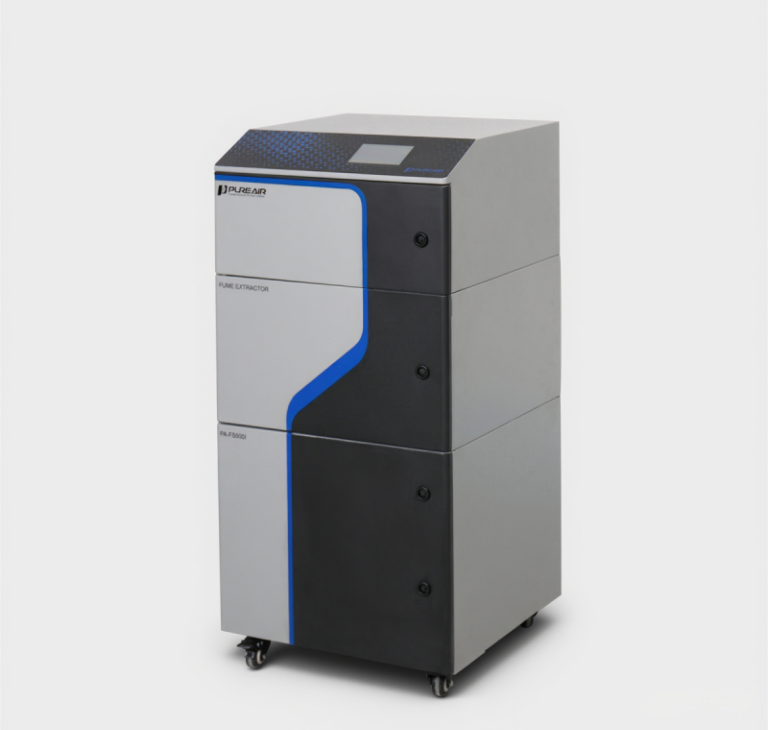
What if we shifted from reacting to designing for longevity? New technology principles—smart airflow control, sensor fusion, and modular filtration—are not gimmicks. They let a unit adapt to different materials and run times. When I look at next-gen designs, I want to see a clear airflow path, redundant sensing (PM2.5 plus VOC sensors), and replaceable filter cartridges that don’t require a degree to swap. The laser engraver air purifier concept I use as a benchmark combines those ideas: variable-speed blowers tuned to maintain capture velocity, HEPA filtration for fine particulates, and an activated carbon stage for odors and gases. That combination keeps particle count and VOC levels down without demanding constant fiddling.
 What's Next — Real-world steps and metrics
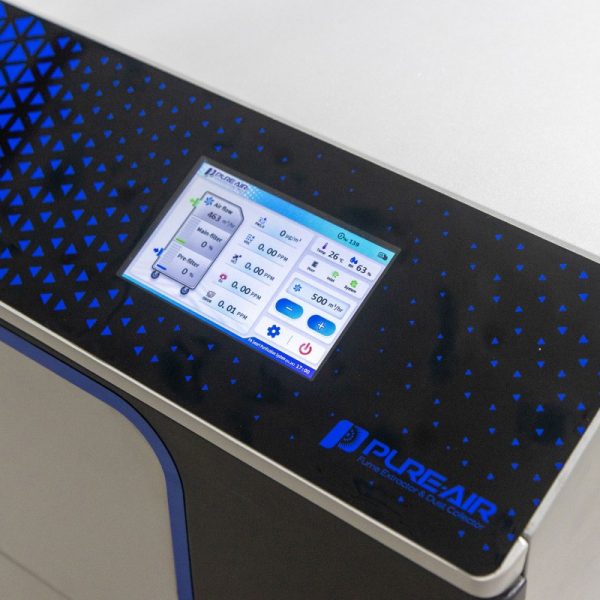
Practically, I recommend three quick checks before you buy: can you measure capture at the nozzle? Are filters modular and readily available? Does the unit use simple diagnostics (LEDs, readouts) so you can spot drift? These are evaluation metrics I use myself. Also—funny how that works, right?—user training matters. A clever control algorithm won’t help if the operator overrides it constantly. So I advise looking at total cost of ownership, not just the sticker price. To close, think about three measurable metrics when evaluating systems: capture velocity at the source, combined filtration efficiency (HEPA + activated carbon), and uptime or maintenance downtime per year. Those tell you whether a solution will protect health and keep production humming. For reliable options and more specifics on systems designed with those principles in mind, I follow the work of PURE-AIR. They’re not the only player, but they do emphasize practical design in ways I appreciate.